Scientific Leadership in Green Tech: Scientific research forms the backbone of any reliable clean energy project. Next Eco Wave's active joint venture is powered directly by Next Solar Korea's corporate research institute, allowing our local divisions to integrate high-performance manufacturing standards within tropical operations.
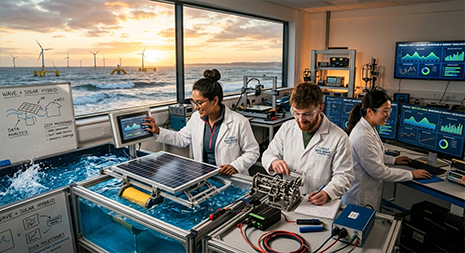
Figure 1: Micro-structured PV cell pattern designed for improved low-light solar harvesting.
Our primary manufacturing partner, Hansol Technics, is a global leader in premium silicon semiconductor assembly. By sourcing modules directly from their automated production lines in South Korea, our engineering divisions deploy plants that achieve conversion rates exceeding 22%—even in highly diffuse and cloudy tropical light conditions.
Equatorial Microclimates and Material Wear: Standard solar cells deteriorate rapidly in regions experiencing high humidity and heavy rainfall. Moisture ingress can cause localized electrical short circuits, leading to early module degradation. Our materials research center mitigates this risk by employing localized weather-sealing technologies.
Key Materials Technology Deployed
-
✓
Double-Glass Encapsulation
Replacing traditional plastic backsheets with high-transparency tempered glass layers, preventing moisture permeation over a 30-year lifetime.
-
✓
Anti-PID Cell Technology
Deploying specialized semiconductor cell coatings that prevent Potential Induced Degradation, maintaining voltage consistency during peak humidity.
-
✓
Intelligent Weather-Adaptive Tracking
Integrating machine learning algorithms inside our Battery Management Systems (BMS) to automatically tilt tracking arrays, maximizing light gathering during storms.
"Our R&D partnership with Hansol Technics ensures that every solar installation deployed in Sri Lanka isn't just standard gear—it is an optimized, tropicalized asset designed to yield maximum lifetime energy."
The Future of Global Climate Tech: By bridging localized expertise with state-of-the-art Korean materials science, Next Eco Wave is constructing a robust ecosystem for sustainable development. Through collaborative technical iterations with DFCC Bank and the SLTDA, we are paving the way for scalable, clean commercial energy across Southeast Asia.